A few months back, I made the trip out to the abandoned mercury mine of Mercuria, located between Sunflower and Payson, Arizona.
This post is mainly to organize some thoughts I had about the experience, as well as some various bits of photography.
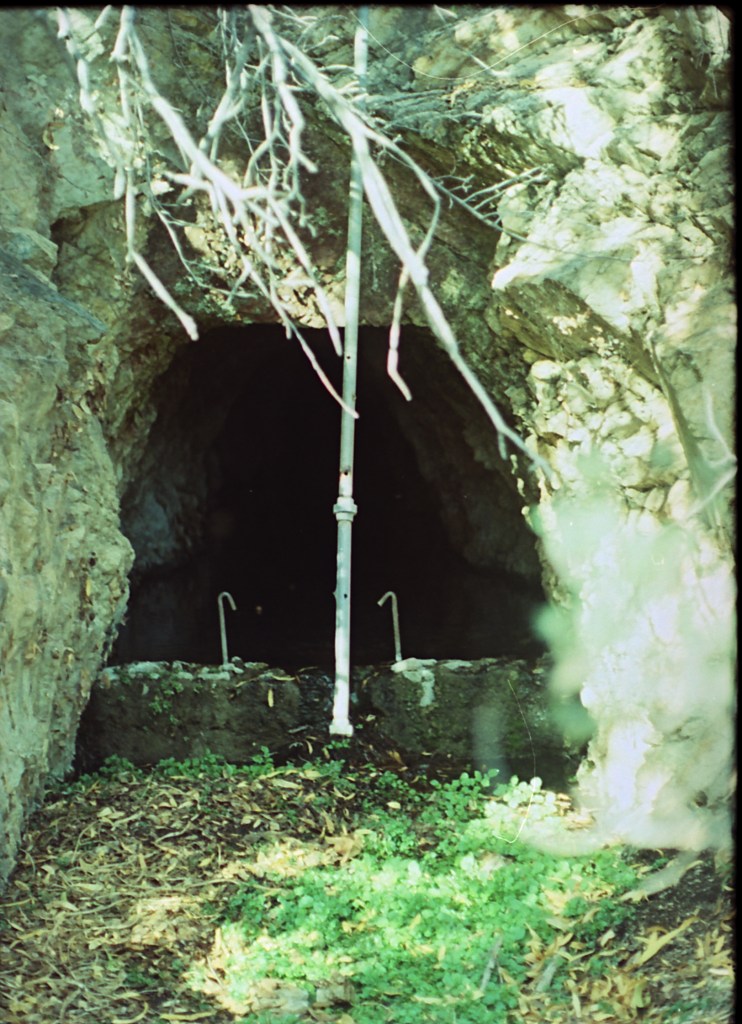
Now, typically when I pick a ghost town or abandoned mining camp to explore, I do my due diligence to research the site.
Yet, beyond a cursory google search to confirm its existence and location, all that I knew about the mine came from a single blog post from 2013.
(Linked here: https://www.mojaveunderground.com/forum/forum/adventure/mines/1173-mysterious-little-known-arizona-ghost-town-and-mercury )
Now, there isn’t much in this world that’s more fascinating to me than a “Mysterious, Little-Known Ghost Town”. Yet, after venturing out to the mine, I now doubt that Mercuria is the site described by the post’s author.
The location of Mercuria, at least of its main ruins, is much too far to have been seen from the highway in the manner described. It’s more likely that the article is talking about “Goswick Camp”, the other possible name that it mentions. I’ll have to go back out there at some point, to see if I can actually locate it.
But, now to talk about the actual site I ended up visiting.

From what I’ve found online, the Mercuria mine ran from 1926 to sometime in the mid 60’s. (source: https://www.ironminers.com/mine-history/mercuria-mine/index.htm)
Other than that, there isn’t much information available. I might do a deeper dive into some newspaper archives soon, and I’ll put my findings into a future post.
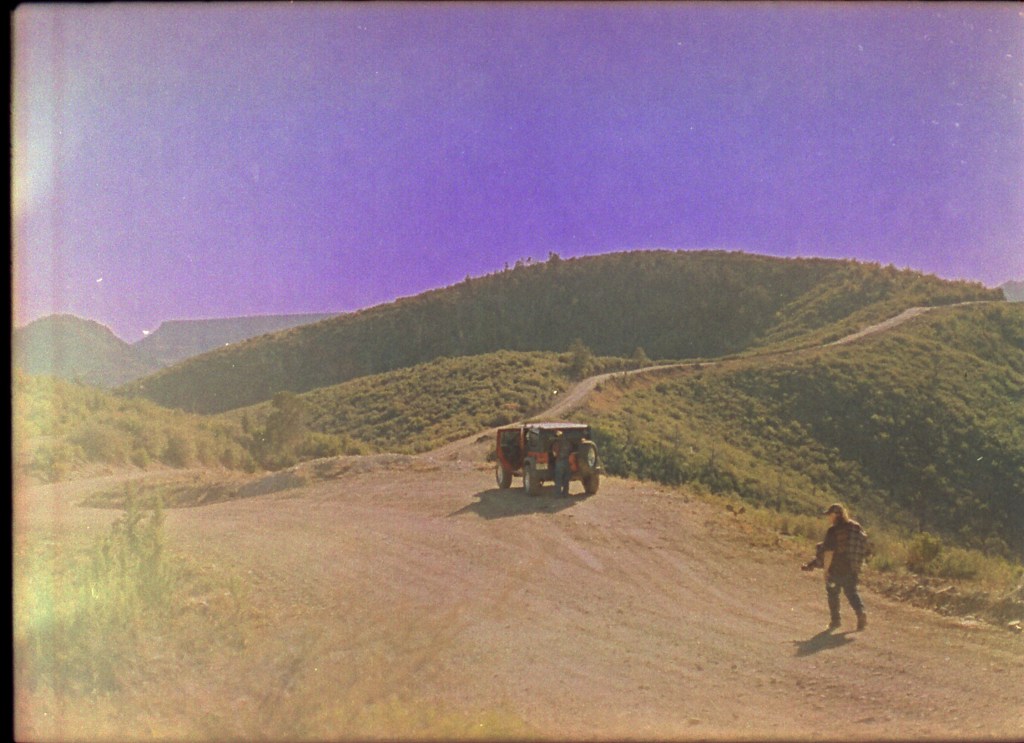
The trip out was a bit of comfortable offroading, for the first 5 miles. It definitely required 4WD in places, but it was manageable.
The last 0.9 miles, however, were a much rougher, narrower path, and we did it on foot. This mile of hiking became a bit of a trial for me, however, because this trip was also a test for a lineup of three analog cameras;
- The Canon AE-1P, my daily carry camera until recently,
- The Olympus Pen FT, a half frame SLR that I had just picked up, (which deserves its own post at some point)
- The Yashica A, a simple, hardy medium format TLR.
All of these preformed well, but I’m definitely going to limit myself to two cameras for future excursions. Hauling a bag, two cameras on neck straps, and a jug of water through the mountains was a bit more challenging than I had expected.
I also believe that juggling the three different formats led to me rushing my shots more than I should’ve, shown in the lack of sharp focus in many of these photos.
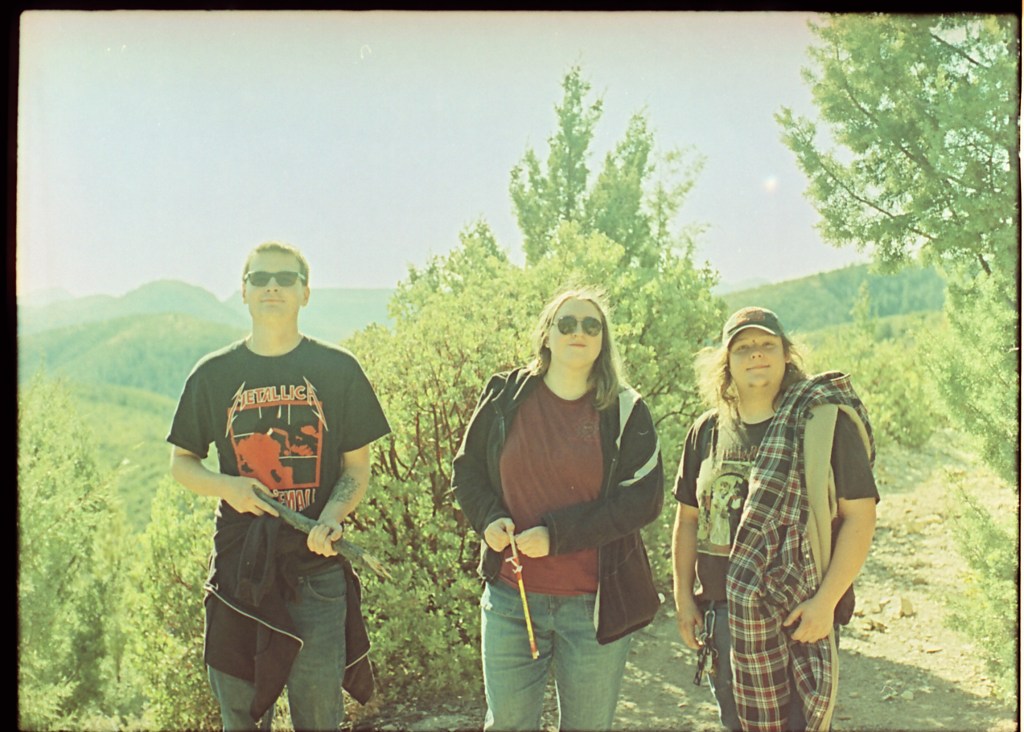
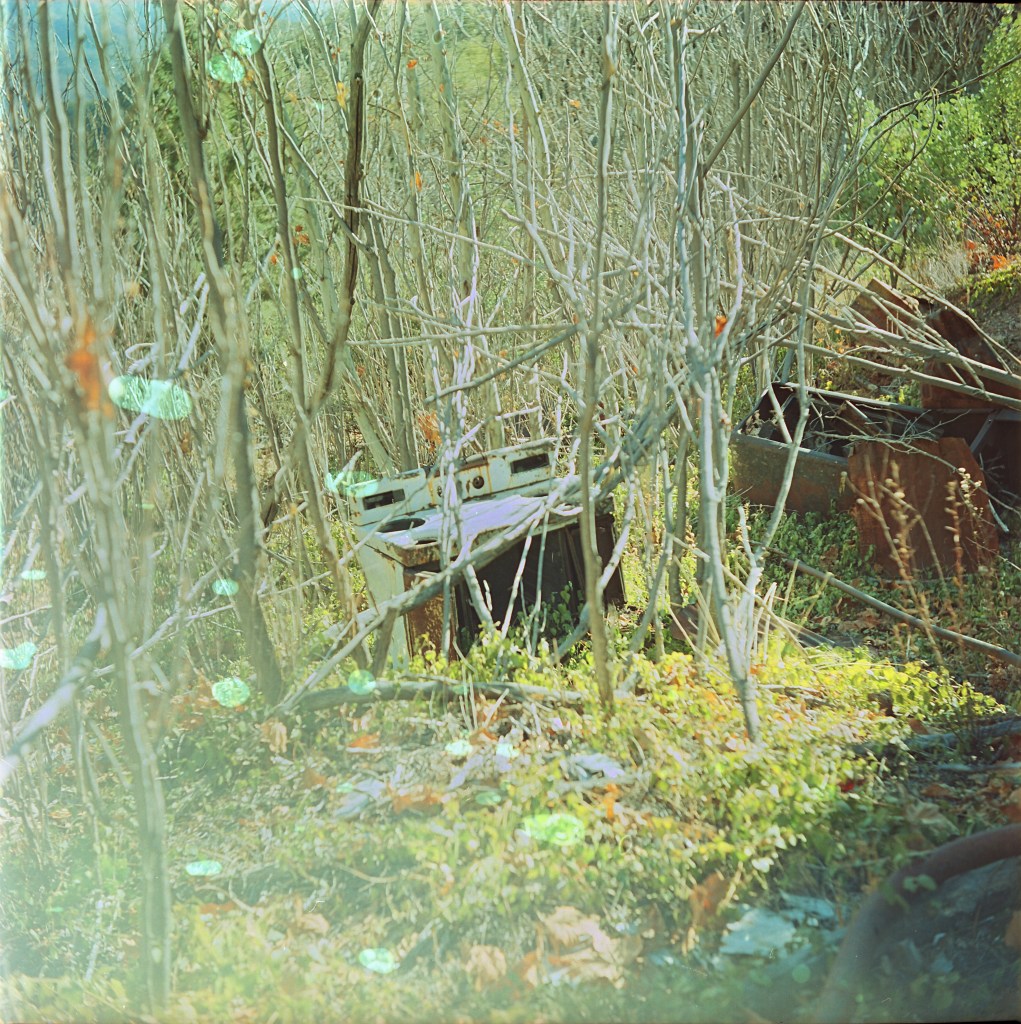
Once we arrived at the site, we were greeted by the remains of a building, likely some sort of cabin. Very little of the actual structure still stands, now just piles of rusted sheet metal and brick. Pieces of furniture still remain, however. Namely, this rather striking overgrown stove.
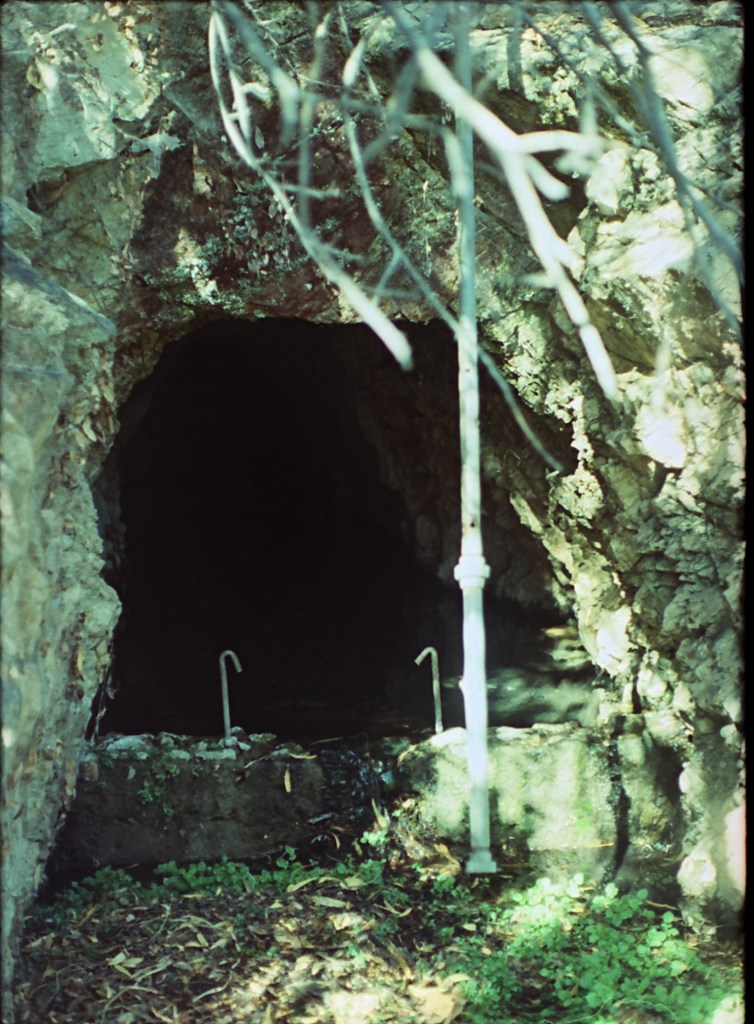
After exploring the house ruins for a bit, we began to wander around the site. Eventually we found a narrow, overgrown path which led to (what I believe) is the main shaft.
It has a small, foot tall dam at the front, containing quite a bit of stagnant ground water. I leaned in for a look, but the swarms of mosquitos discouraged further inspection.
Down the path from the mine’s opening, we found a few more spots of interest;
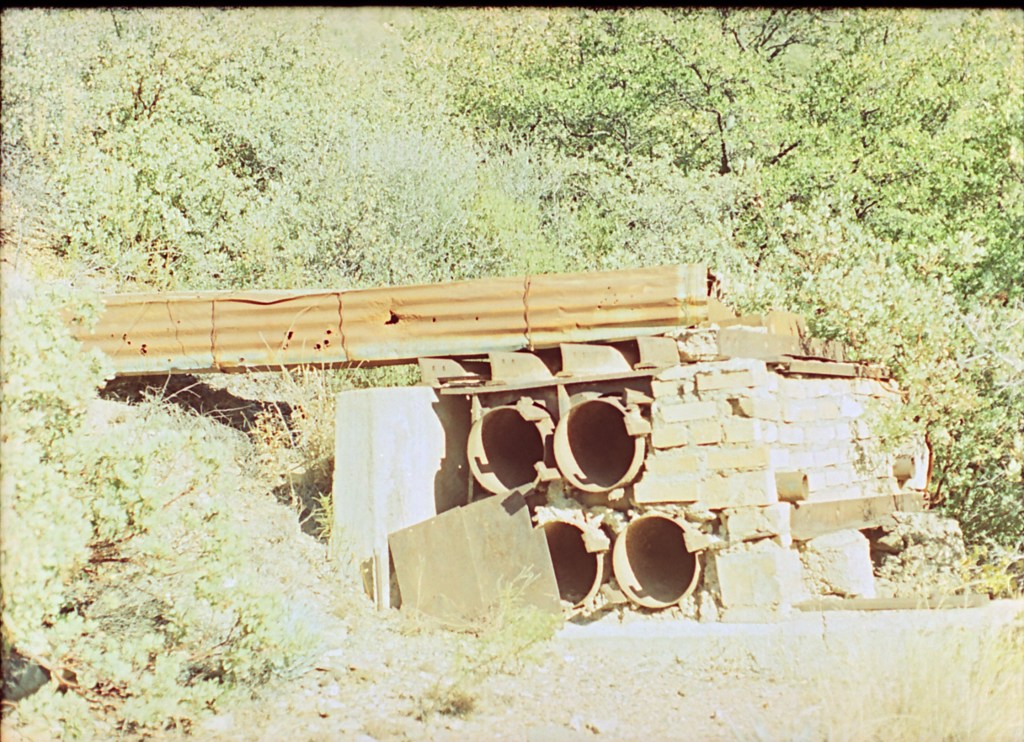
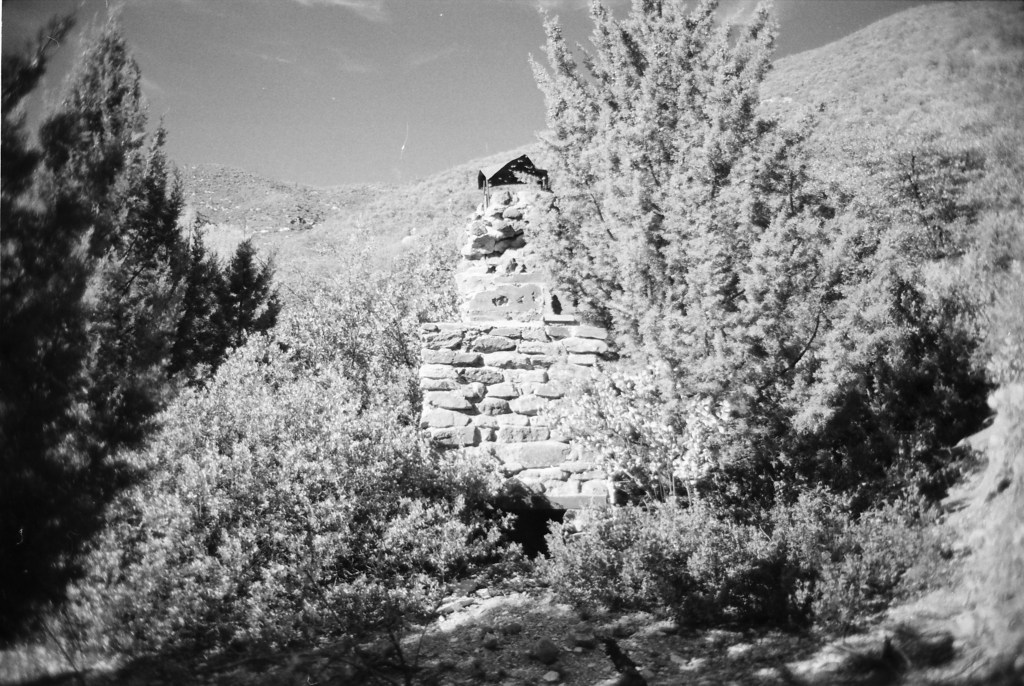
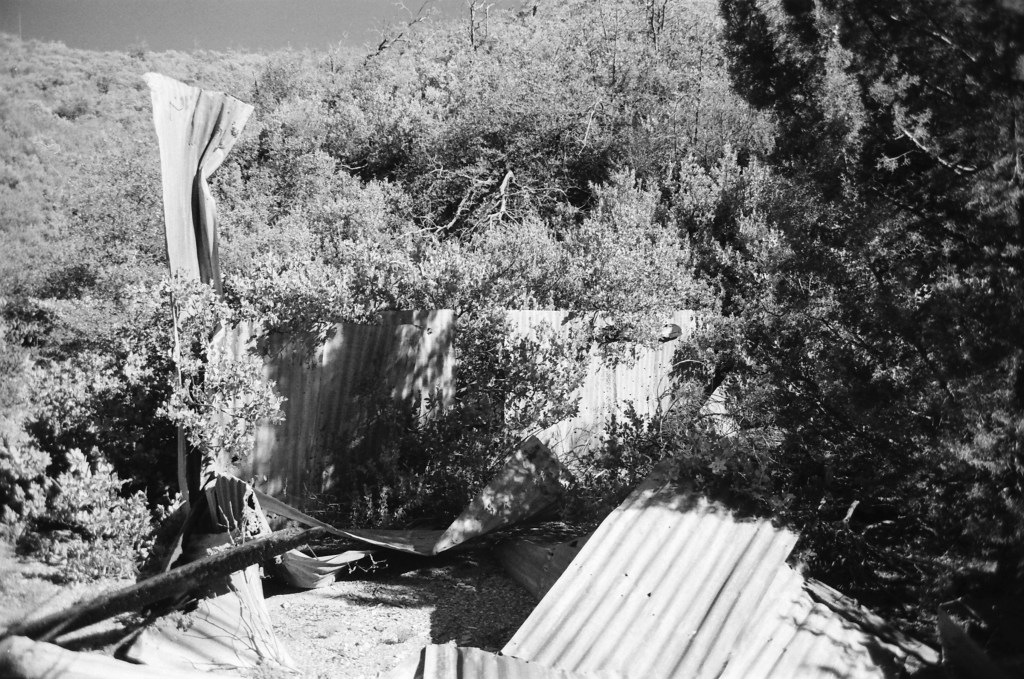
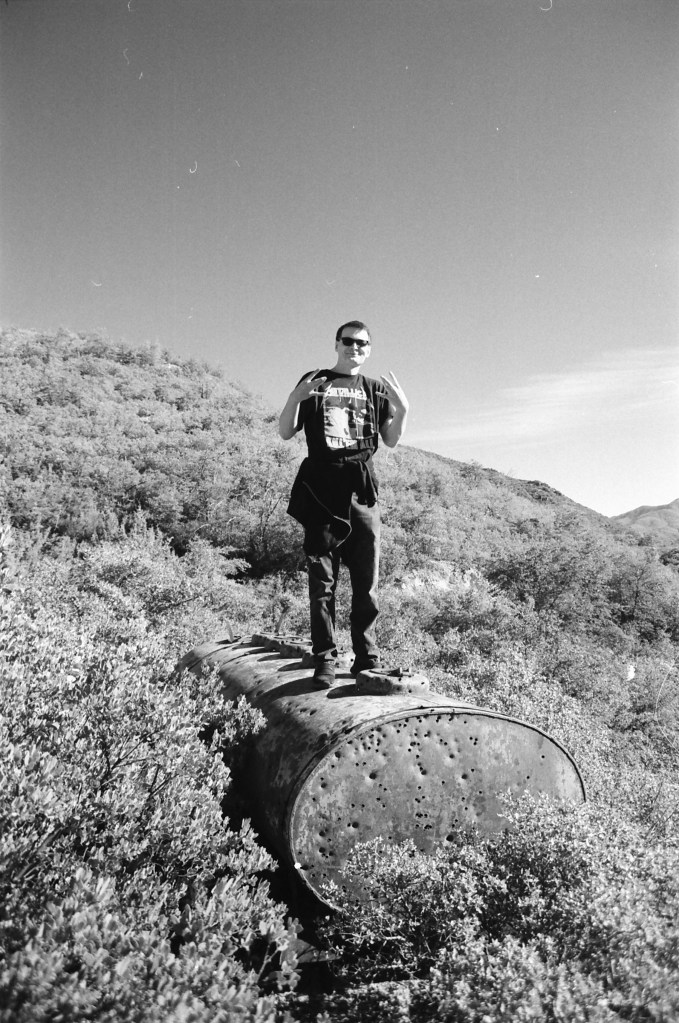
Overall, the trip was a valuable bit of experience, photography-wise. I’d say that I averaged 8-14 good photos per 35mm roll.
It was also an interesting challenge to the “philosophy” surrounding my photography.
(I might get a bit pretentious here, but calling an analog photographer pretentious is a bit like calling water wet. It comes with the territory.)
There seem to be two mindsets that I can be in when I’m taking photos; Art and Documenting.
If I’m trying to make “art”, the primary concern is trying to take something that looks good. Aesthetics are the most important factor, even if that means I’m not necessarily portraying the subject accurately.
Whereas, if I’m trying to document something, ideally the aesthetics are pleasing, but the goal is to create a good representation of the photo’s subject. This might mean accepting a flatter image in order to bring out more details, whereas I prefer very high contrast when I’m shooting for “art”.
Ideally, these two mindsets might merge as I’m shooting. I want to make art that represents my subject as I see it, without sacrificing the visual quality of the image. I feel like this isn’t a unique goal to my photography, but it is one that’s taken me a while to fully realize.
I believe that this excursion was a decent attempt at it, but the results still leave something to be desired. for most of these shots, I’ve had to resist putting asterisks in their captions, describing what I could have done better to frame, focus, or meter for them.
But, even if it’s a learning experience, I also need to let my work speak for itself.
– H. A. D’Angelo
 Pleasant Pigeon Press